
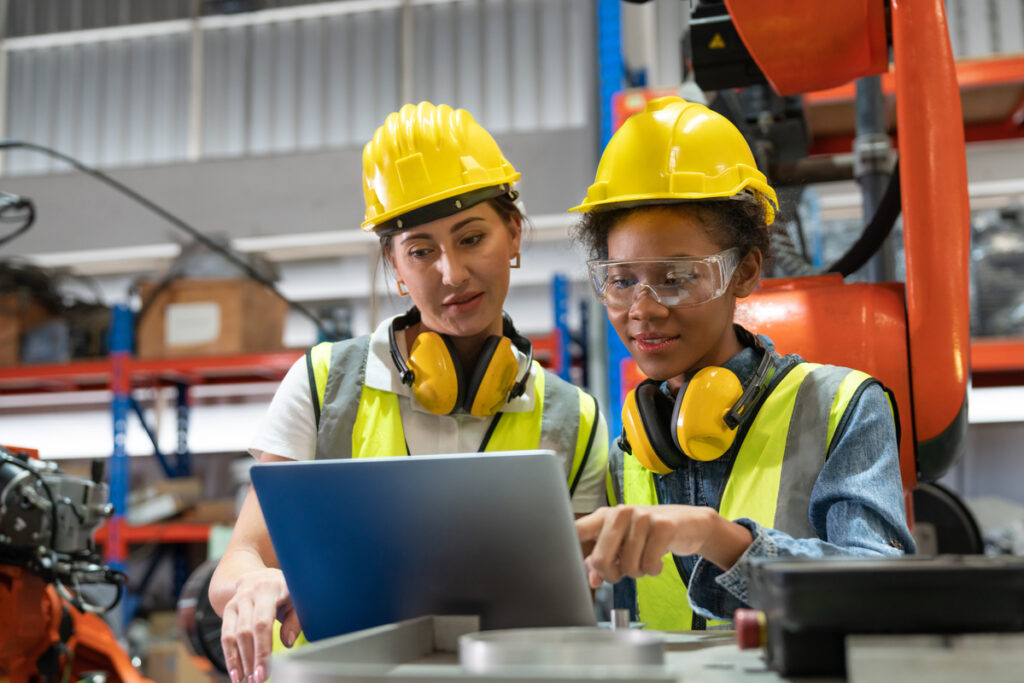
The U.S. manufacturing industry is currently going through a major transformation. As reshoring, new factory construction, and production expansion continue, many companies are facing a serious labor shortage.
For job seekers, this means that there are more opportunities to find work in the manufacturing industry.
Japanese manufacturing companies in the U.S. are also hiring for a wide range of roles, including production staff, quality control, CNC operators, welders, warehouse and logistics staff, and Japanese-English bilingual coordination or management positions.
For those who want to gain hands-on skills, work steadily at a Japanese company, or build a long-term career in manufacturing, this is a strong time to explore new opportunities.
In this article, we will explain current hiring trends in U.S. manufacturing, why the industry can be accessible even for beginners, what strengths can be useful at Japanese manufacturing companies, what to check before applying, and how to use HRAIT IQ+ to find jobs that match your background.
Table of Contents
- Why Manufacturing Jobs Are Easier to Find in the U.S. Right Now
- Common Concerns About Working at Japanese Manufacturing Companies
- How U.S. Manufacturing Work Is Changing in 2026
- Three Strengths You Can Use in Japanese Manufacturing
- What to Check Before Applying
- Find Manufacturing Jobs That Match You with HRAIT IQ+
- Summary: Finding the Right Manufacturing Job in the U.S.
- References
Why Manufacturing Jobs Are Easier to Find in the U.S. Right Now
The U.S. manufacturing workforce is approximately 12.6 million people. However, from 2024 to 2033, the industry may need as many as 3.8 million new workers.(Deloitte / The Manufacturing Institute)
2026 U.S. Manufacturing Job Market Data for Job Seekers
・Manufacturing job openings in Q1 2026: approximately 440,000 to 510,000(BLS JOLTS)
・Average hourly wage for production and nonsupervisory employees in April 2026: $30.10(BLS)
・Share of production occupations that do not require a specific education level: 48.1%(BLS Occupational Requirements Survey)
・Share of manufacturers considering or testing AI and automation: 98%(Redwood Software 2026)
There Are Many Job Openings
As of the first quarter of 2026, the U.S. manufacturing industry had approximately 440,000 to 510,000 job openings.
Because labor shortages continue, job seekers may have more opportunities to compare positions, locations, schedules, and working conditions before choosing where to apply.
In terms of pay, the average hourly wage for production and nonsupervisory employees in manufacturing reached $30.10 in April 2026. Pay varies by position, location, experience, and shift, but manufacturing can offer relatively stable income even for hands-on roles.
Many Positions Are Accessible Without Prior Experience
In production occupations, 48.1% of roles do not require a specific education level.
Many factory positions provide on-the-job training, so candidates without manufacturing experience may still be able to start in entry-level roles.
At Japanese manufacturing companies, there are also opportunities in assembly, inspection, packaging, machine operation support, warehouse work, and production assistance.
Generational Change Is Creating New Opportunities
According to Deloitte and The Manufacturing Institute, the U.S. manufacturing industry may need up to 3.8 million new workers between 2024 and 2033.
If the skills gap and applicant shortage continue, up to 1.9 million of those roles may remain unfilled.
For companies, this is a serious challenge. For job seekers, it means there may be more room to enter the manufacturing industry, even without a traditional manufacturing background.
Japanese Language and Cultural Understanding Can Be a Strength
Japanese manufacturing companies often need not only local production staff, but also people who can communicate with Japanese headquarters, support bilingual coordination, or understand Japanese work culture.
Even if you are not confident in your English, Japanese language skills or familiarity with Japanese business culture can be a valuable advantage in some roles.
Common Concerns About Working at Japanese Manufacturing Companies
Many people who are considering a manufacturing job in the U.S. have concerns before applying.
“I Don’t Have Technical Skills Yet”
Some people worry that they cannot be hired without CNC, welding, electrical, or quality control experience.
In reality, the required skill level depends on the position. Many production roles allow employees to learn through on-the-job training.
“I’m Not Confident in My English”
Not every position requires native-level English.
At some Japanese companies, Japanese language ability, attention to detail, reliability, and willingness to learn may be more important than advanced English communication skills.
“I’m Not Sure About Visa or Work Authorization Requirements”
Work authorization and visa support requirements vary by company and position.
Before applying, it is important to confirm whether your current work authorization status matches the job requirements and whether visa sponsorship is available.
“I’m Worried About Adapting to the Workplace Culture”
Japanese manufacturing companies may value practices such as reporting, communication, kaizen, 5S, quality control, and teamwork.
For candidates who understand Japanese workplace culture, these expectations can become an advantage rather than a barrier.
How U.S. Manufacturing Work Is Changing in 2026
New Factories and Production Sites Are Creating Hiring Demand
Investment in U.S. manufacturing continues to grow, and many companies are opening or expanding factories and production sites.
As a result, hiring needs are increasing across production, quality control, machine operation, warehouse, logistics, engineering support, and management roles.
AI and Automation Skills Are Becoming More Important
Manufacturing sites are increasingly adopting AI, automation tools, and digital systems.
This does not mean that all workers need to be engineers. However, being comfortable with machines, digital tools, production systems, and automated equipment can help job seekers stand out.
Companies Value People Who Can Stay Long Term
Hiring and retaining workers is one of the biggest challenges in manufacturing.
For that reason, companies are placing more value on candidates who want to learn, stay long term, gain technical skills, and contribute to the team.
Three Strengths You Can Use in Japanese Manufacturing
Japanese manufacturing companies do not evaluate candidates only by experience or certifications. Work attitude, reliability, and cultural fit can also matter.
Three key strengths that can help you stand out:
1. Technical and hands-on ability
2. Understanding of Japanese workplace culture
3. Motivation to work long term
Strength 1: Technical and Hands-On Ability
Experience in CNC operation, welding, electrical work, quality control, inspection, assembly, or machine operation can be a strong advantage.
Even without experience, accuracy, attention to detail, concentration, safety awareness, and the ability to follow procedures carefully can be valuable strengths.
Strength 2: Understanding of Japanese Workplace Culture
Japanese manufacturing companies often value communication, teamwork, kaizen, 5S, and quality awareness.
Candidates who understand Japanese workplace expectations may adapt more smoothly and be evaluated positively.
If you can communicate in Japanese or understand both Japanese and American workplace cultures, you may also be able to support communication between local teams and Japanese headquarters.
Strength 3: Motivation to Work Long Term
Because hiring and training costs are high in manufacturing, companies value people who want to stay and grow.
During interviews, it is helpful to explain why you want to work in manufacturing, what skills you want to gain, and what kind of career you want to build.
What to Check Before Applying
Manufacturing jobs can vary widely depending on the company, factory, shift, and position. Before applying, check the following points carefully.
Does the Job Description Match the Actual Work?
Make sure the duties listed in the job posting match what you will actually do.
During the interview, ask about the daily workflow, main responsibilities, physical requirements, tools or machines used, and training process.
Check Pay, Shift, and Benefits
Hourly wage or salary is important, but it is not the only factor.
Also check working hours, overtime, shift flexibility, benefits, commute, and whether the schedule fits your lifestyle.
Understand the Workplace Atmosphere
The work environment can vary greatly from one factory to another.
If possible, ask about the team structure, communication style, supervisor support, and whether Japanese-speaking staff and local staff work closely together.
Ask About Training and Career Growth
It is a good idea to ask what skills you can learn after joining the company and whether there are opportunities for promotion, raises, or cross-training.
Asking about training can also show that you are serious about staying and growing with the company.
Find Manufacturing Jobs That Match You with HRAIT IQ+
By registering with HRAIT IQ+, HRAIT’s AI-powered career matching tool, you can more easily access job opportunities at Japanese companies, including manufacturing roles.
Based on your profile, experience, skills, and preferences, HRAIT IQ+ helps you identify jobs that may match your background.
Benefits include:
- Find manufacturing jobs that match your experience
- Check which positions fit your skills and preferences
- Prioritize which jobs to apply for first
- Discover beginner-friendly manufacturing roles
- Explore long-term career opportunities at Japanese companies
Even if you are not sure which job is right for you, you can start by registering and reviewing available opportunities.
Summary: Finding the Right Manufacturing Job in the U.S.
The U.S. manufacturing industry is one of the fields where job seekers may find strong opportunities due to continued investment and labor shortages.
At Japanese manufacturing companies, there are opportunities not only for experienced technical workers, but also for beginners, Japanese speakers, bilingual candidates, and people who want stable long-term work.
The key is to organize your strengths, clarify your work preferences, and choose a workplace where you can grow.
- The U.S. manufacturing industry has many job openings
- Many production roles do not require a specific education level
- Japanese language skills and cultural understanding can be strong advantages
- Before applying, check the job duties, pay, schedule, benefits, and work environment
- HRAIT IQ+ can help you find manufacturing jobs that match your background
If you are considering a manufacturing job in the U.S., start by reviewing your experience, skills, and preferred conditions. Then register with HRAIT IQ+ to check job opportunities that may fit your background.
▼ For job search consultation and more details about HRAIT, please click here.
▶ Register with HRAIT and explore job opportunities
References
- Job Openings and Labor Turnover Summary (JOLTS)|U.S. Bureau of Labor Statistics
- Table B-8. Average hourly and weekly earnings of production and nonsupervisory employees|U.S. Bureau of Labor Statistics
- Production Occupations|U.S. Bureau of Labor Statistics, Occupational Requirements Survey
- US Manufacturing Could Need as Many as 3.8 Million New Employees by 2033|Deloitte / The Manufacturing Institute
- Manufacturers Need as Many as 3.8 Million New Employees by 2033|The Manufacturing Institute
- Manufacturing AI and Automation Outlook 2026|Redwood Software
Latest Articles
- Software Engineer Resume: Turn Maintenance, Bug Fixes, and Internal Tools Into Impact
- Travel Operations Interview: How to Prioritize Simultaneous Changes and Delays
- Driver’s License Required for a Job: Ask What You Will Drive and Who Pays
- Office Coordinator Resume: Prove Vendor, Facilities, and Request Tracking
- Production Planner Interview: Explain a Material Shortage and Schedule Change
Find Your Dream Job
HRAIT will help you achieve career advancement in the U.S. and aim for a high income.
REGISTER for FREE
We provide full support for your job hunting in the U.S.